

Introduction: A Serendipitous Discovery That Lit a Fire 🔥
In the vast, intricate world of peptides tiny chains of amino acids that act as master messengers in the body few stories are as intriguing as that of PT-141. This isn’t a tale of a drug designed from scratch in a sterile lab to target sexual dysfunction. Oh no. This is a story of accidental genius, of a side effect so powerful it eclipsed the original intention. Imagine seeking a golden tan and stumbling upon a key to the libido’s deepest vaults. That is PT-141. It began life as Bremelanotide, a metabolite of Melanotan II (itself developed for sunless tanning and protective against UV radiation). Researchers quickly noticed that subjects weren’t just getting tanner; they were reporting intense, spontaneous erections and a surge in sexual desire. The scientific community leaned in. The “tanning peptide” had a secret, and it was about to ignite a revolution in how we understand and treat disorders of desire and arousal. This post is your definitive, deep-dive guide into PT-141, covering its unique mechanism, profound applications, real-world experiences, and the electrifying future it promises.
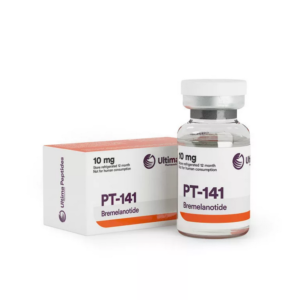
Chapter 1: The Science of Desire – How PT-141 Works (It’s Not a Hormone!) 🧠⚙️
To appreciate PT-141, you must first forget everything you know about traditional sexual dysfunction treatments like Viagra (sildenafil) or Cialis (tadalafil). Those are vasodilators; they work on the cardiovascular system, increasing blood flow to the genitalia. They are mechanics of the body, not architects of the mind.
PT-141 operates on an entirely different, and arguably more fundamental, level: the central nervous system (CNS). Its primary target is the brain.
The Key Mechanism: MC4 Receptor Agonism 🗝️
PT-141 is a synthetic melanocortin peptide agonist. Its primary action is binding to and activating melanocortin receptors, specifically the MC4R subtype, which are densely concentrated in brain regions critical for sexual behavior: the hypothalamus and the limbic system.
Think of the MC4 receptor as a master switch in the brain’s “command center” for primal drives hunger, energy, and crucially, sexual arousal. When PT-141 flips this switch, it doesn’t just send blood south; it sends powerful, pro-sexual signals cascading through your neural pathways.
The Neurochemical Cascade:
-
Dopamine Release: ✅ The “reward and craving” neurotransmitter. PT-141 stimulates its release, creating a state of motivated desire, anticipation, and pleasure-seeking.
-
Oxytocin Modulation: 🤝 Often called the “love hormone,” oxytocin is involved in bonding, touch sensitivity, and orgasm. PT-141’s action is believed to prime this system.
-
Nitric Oxide Synthase Activation: 💨 While its primary action is central, there is a downstream peripheral effect. PT-141 stimulates the production of nitric oxide (NO) in the erectile tissue itself, complementing the brain’s “go signal” with a local “execute signal” for vasodilation.
The Crucial Difference: Desire vs. Function
This brain-centric mechanism explains PT-141’s unique profile:
-
For All Genders: It works in both men and women because the brain’s architecture for desire is more similar than the hardware for arousal.
-
For Low Libido: It can spark spontaneous sexual thoughts and interest (libido), not just enable a physical response when sexually stimulated.
-
Psychological Barrier Breaker: For those with arousal disorders linked to anxiety, stress, or past trauma (“spectatoring”), bypassing the conscious, anxious mind and speaking directly to the primal brain can be revolutionary.
PT-141 isn’t fixing a pipe; it’s rewiring the command center to remember what it’s like to want.
Chapter 2: The Landscape of Application – Who Can Benefit? 🗺️❤️🩹
The unique mechanism of PT-141 opens doors for populations underserved by existing therapies.
For Women: Addressing the Most Common—and Neglected—Sexual Complaint
Female Sexual Interest/Arousal Disorder (FSIAD) is prevalent, yet treatment options have been abysmal. PT-141, under the brand name Vyleesi® (bremelanotide), became in 2019 the second FDA-approved drug for HSDD (Hypoactive Sexual Desire Disorder) in premenopausal women.
-
The “Brain-Out” Solution: Many female arousal issues are desire-based, rooted in stress, fatigue, or relational dynamics. PT-141’s central action can provide that initial spark of desire that breaks the cycle of avoidance.
-
Clinical Trial Results: Studies showed a statistically significant increase in the number of “satisfying sexual events” and a decrease in distress related to low desire. The effect wasn’t universal, but for responders, it was life-changing.
For Men: Beyond Erectile Dysfunction (ED)
Men with ED have options, but men with low libido or SSRI-induced sexual dysfunction have been in a treatment desert.
-
Low Libido (Male HSDD): For men whose issue isn’t mechanical (“I can’t get it up”) but motivational (“I don’t even think about sex”), PT-141 targets the core problem.
-
SSRI-Induced Dysfunction: A tragic side effect of life-saving antidepressants. PT-141, by acting on a separate pathway, can often restore libido and function without interfering with the antidepressant’s efficacy.
-
Psychological ED: Performance anxiety creates a vicious cycle. PT-141 can provide a reliable “reset,” building confidence by ensuring a strong physiological response.
For Couples & Connection: The Shared Experience 👫
Perhaps the most beautiful application is relational. When one or both partners struggle with desire disparity, it creates profound strain. PT-141 can be a tool for reconnection.
-
Synchronizing Desire: Used strategically (e.g., 1-2 times per week), it can help partners get “on the same page,” creating windows for intimacy that rebuild patterns and emotional bonds.
-
Reducing Pressure: The predictable timeline (effects peak 2-4 hours post-injection) allows couples to plan intimacy without the awkwardness of “will it work?” This planned spontaneity can be freeing.
The Off-Label Frontier: Anecdotal Potentials
The community reports explore uses for:
-
Anhedonia & Low Mood: The dopamine boost may provide a temporary lift in general motivation and pleasure capacity.
-
Body Image Issues: The slight tanning effect (from its Melanotan heritage) and the feeling of heightened sexuality can improve body confidence.
-
Exploring Sensory Heightening: Some report increased sensitivity to touch and a more profound emotional connection during intimacy.
Chapter 3: The Nuts & Bolts: Administration, Dosing, & Side Effects 💉📊
PT-141 is not a pill. It’s a peptide that would be destroyed in the gut, so it requires subcutaneous injection. This sounds daunting but is simple with practice.
Administration: A Step-by-Step Guide
-
Reconstitution: PT-141 comes as a freeze-dried powder. You mix it with bacteriostatic water to create an injectable solution.
-
The Injection: Using a tiny insulin syringe (31-32 gauge), you inject a small volume (typically 0.1-0.3mL) into the fatty tissue of the abdomen, thigh, or the back of the arm. The needle is so fine most people feel only a slight pinch.
-
Timeline: Effects are not immediate. The journey is:
-
T=0: Inject.
-
T+60 to 90 mins: First signs—a slight flush, a feeling of warmth, a “tingling” in the groin, spontaneous sexual thoughts.
-
T+2 to 4 hours: Peak effects. This is the window of optimal activity.
-
T+6 to 8 hours: Effects gradually taper. A “pleasant afterglow” can last up to 24 hours.
-
Dosing Philosophy: Start Low, Go Slow 🐢
-
Beginner Dose (Men & Women): 0.5 mg to 1.0 mg. This is non-negotiable. You must assess tolerance.
-
Common Effective Dose: 1.5 mg to 2.0 mg is the sweet spot for most.
-
Maximum Dose: Rarely needed above 2.5 mg. More is not always better and increases side effect risk.
-
Frequency: To avoid tachyphylaxis (rapid tolerance), do not dose more than 2-3 times per week, with at least 48 hours between doses. Less is often more.
The Side Effect Spectrum: From Annoying to Serious 🚨
PT-141 is generally well-tolerated, but side effects are common, especially at higher doses. They are transient, usually peaking 30-60 minutes post-injection and fading as the therapeutic effects begin.
-
Very Common (>30%):
-
Facial Flushing: A red, warm face. Harmless but obvious.
-
Nausea: The most cited side effect. It’s often mild but can be pronounced. Taking an anti-nausea medication (like ondansetron) 30 min before injection, or injecting before a light meal, can help immensely.
-
-
Common (10-30%):
-
Spontaneous Yawning/Stretching: A bizarre but universal sign the peptide is active.
-
Appetite Suppression: A known effect of MC4R activation.
-
Fatigue or Lethargy: Some feel a temporary wave of tiredness.
-
-
Less Common (<10%):
-
Headache
-
Increased Blood Pressure & Heart Rate: A transient effect. CONTRAINDICATED for those with uncontrolled cardiovascular disease.
-
Darkening of Moles/Freckles: A direct effect of its melanocortin activity. Requires sun awareness and skin monitoring.
-
The #1 Rule: You must have a legitimate, quality source and consult with a knowledgeable healthcare provider. This is a potent neuroactive compound, not a supplement.
Chapter 4: PT-141 vs. The World: A Comparative Analysis 🥊🏆
How does it stack up against the heavyweights?
-
vs. Viagra/Cialis (PDE5 Inhibitors):
-
PT-141: Brain-first. Creates desire. Works for men and women. Side effects are systemic (nausea, flush).
-
PDE5is: Body-first. Enables function if desire is present. Primarily for men. Side effects are vascular (headache, stuffy nose, back pain).
-
Verdict: They are complementary, not competitive. Many men use a low dose of both for a full-spectrum effect: PT-141 for the mental spark, a PDE5i for the physical guarantee.
-
-
vs. Testosterone Therapy:
-
PT-141: Acute, on-demand effect. Works regardless of endogenous hormone levels. No suppression of natural production.
-
Testosterone: Chronic, foundational hormone replacement. Takes weeks to work, affects entire body composition, mood, energy. Risk of shutting down natural production.
-
Verdict: Apples and oranges. Testosterone is for a diagnosed deficiency. PT-141 is an acute activator of existing pathways.
-
-
vs. Wellbutrin (for SSRI-induced dysfunction):
-
PT-141: On-demand, potent pro-sexual effect. Can be used with an SSRI.
-
Wellbutrin: A daily antidepressant (NDRI) that is less likely to cause sexual dysfunction and can sometimes counteract it. Its libido effects are milder and chronic.
-
Verdict: PT-141 is a more targeted, powerful tool for the sexual side effect itself.
-
Chapter 5: The Mind-Body Connection: Beyond the Physical 🧘♀️✨ PT-141
Using PT-141 responsibly demands an understanding that it’s a tool, not a magic wand. It opens a door, but you must walk through it.
-
Set & Setting Matter: Injecting while stressed, in a bad relationship, or in an unsexy environment will blunt its effects. It amplifies your underlying state. Use it as an opportunity for mindful connection—dim lights, put away phones, focus on touch.
-
The “Practice Effect”: For people who have been sexually inactive or avoidant, PT-141 can provide the successful experiences needed to rebuild neural pathways of pleasure and anticipation without fear.
-
Integrating with Therapy: For trauma-based or deep-seated psychological issues, PT-141 is best used in conjunction with therapy (e.g., sex therapy, CBT). It can give the client the physiological capacity to engage with therapeutic exercises they previously couldn’t.
Chapter 6: The Future & Ethical Horizons of PT-141 🚀🔮
PT-141 is just the beginning. Its success has validated the melanocortin pathway as a target for sexual health and beyond.
-
Next-Gen Formulations: Research is ongoing into intranasal sprays and transdermal patches to eliminate the injection barrier.
-
New MC4R Agonists: Pharmaceutical companies are racing to develop molecules with the efficacy of PT-141 but without the nausea (e.g., by targeting receptor subtypes more selectively).
-
Broader Psychiatric Applications: Research is exploring MC4R agonists for depression, anxiety, and addiction—conditions deeply tied to the brain’s reward circuitry.
-
The Enhancement Debate: Like any powerful agent, PT-141 sits at the crossroads of therapy and enhancement. Is using it for a “boost” in a healthy relationship ethical? Where do we draw the line? These are conversations society must have as these technologies become more accessible.
Conclusion: Rekindling the Fire, on Your Terms 🔥🗝️
PT-141 (Bremelanotide) is a landmark discovery. It is the first agent to successfully and reliably target the central control room of human sexual desire. It represents a paradigm shift from a mechanical model of sexual dysfunction to a neurological and holistic model.
Its journey from a tanning peptide to an FDA-approved pharmaceutical is a testament to the surprises of science. For the individual, it can be a powerful key—to reconnect with a partner, to reclaim a part of oneself silenced by medication or life’s stresses, or to simply explore the depths of one’s capacity for pleasure and connection.
It is not without its quirks the injection, the transient nausea, the need for mindful use. But for those who have struggled in the silent, frustrating realm of low desire, these are small trade-offs for the potential to feel a spark they feared was gone forever.
Final Thought: If sexuality is a symphony, PT-141 is not the musician or the instrument. It is the conductor, tuning the orchestra of your brain and body, ensuring all the sections come in at the right time, with passion and power, to create a masterpiece of connection. The rest, as always, is up to you.
Disclaimer: This blog post is for informational and educational purposes only. It is not medical advice. PT-141/Bremelanotide is a potent prescription drug (Vyleesi) in many countries. You must consult with a licensed healthcare professional to discuss your individual circumstances, risks, and appropriate use before considering this or any other medical treatment.